24/7 Live Law Session With Experts ✦ Exclusive Offer: 50% OFF – Ends in 2 Days!

Cyber Crimes Can Take Someone to Jail: Understanding Its Legal Consequences and the Cyber Crime Lawyers’ Practice
Understanding Cybercrime Punishments and Legal Consequences
Cybercrimes pose a rapidly growing threat in Pakistan and around the world. Hacking, online fraud, identity theft, data breach, etc., certain crimes are to be charged under the most serious laws. One of the contemplated questions raised among the masses goes: “Can one go to jail for cyber crimes?” The importance of the article is in understanding the law, the punishment, and the mode by which cybercrime lawyers defend individuals or organizations accused of offenses with respect to cyberspace.
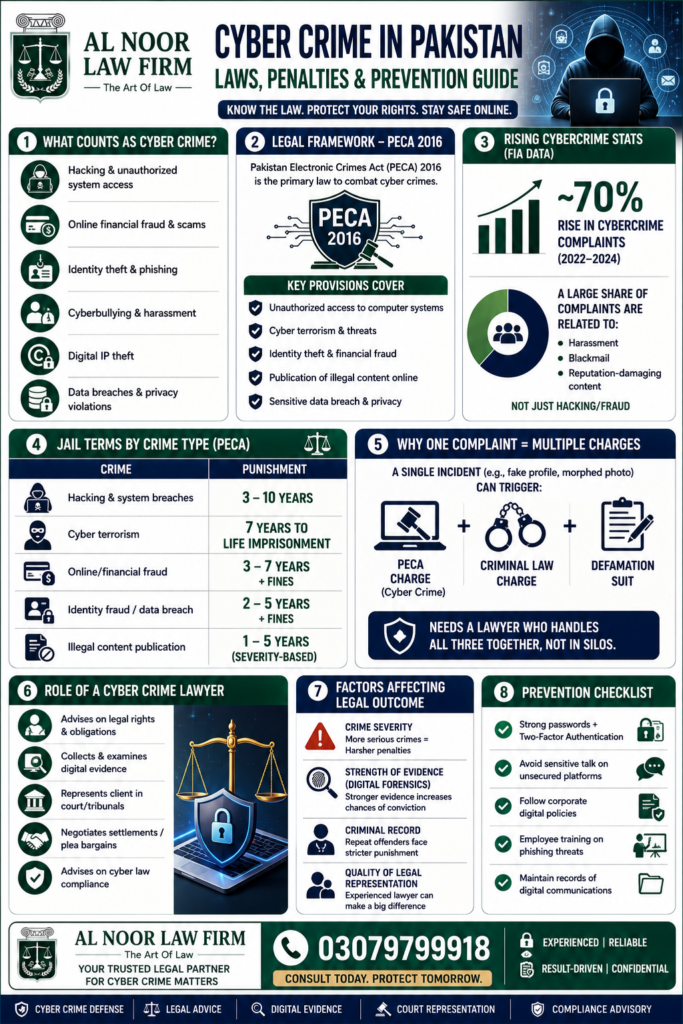
Cyber Crime in Pakistan
Protect Your Digital Rights
Cybercrime includes hacking, online fraud, identity theft, cyberbullying, and data breaches. Understanding cyber laws, preserving digital evidence, and seeking timely legal assistance can help protect your rights and ensure the best possible legal outcome.
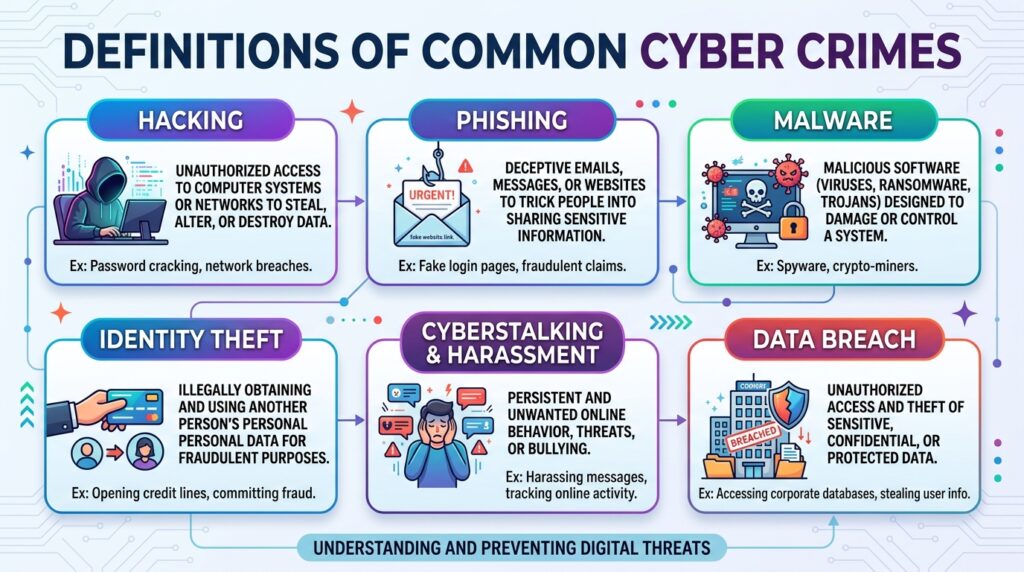
Definitions of Cyber Crimes?
Cyber crimes encompass any illegal act done through the use of computers and networks or by means of digital devices. Some examples of cyber crimes are as follows:
Hacking and unauthorized system access
Online financial fraud and scams
Identity theft and phishing
Cyberbullying and harassment
Digital intellectual property theft
Data breaches plus privacy violations
Such crimes with the effect of damaging any person or corporate sector, or for that matter, any governmental system, are dependent upon the enactment of these laws on cyber crimes.
Legal Framework on Cyber Crimes in Pakistan
Pakistan deals with cybercrime by passing the Prevention of Electronic Crimes Act (PECA) 2016. The main provisions of the Act concern:
Unauthorized access to computer systems
Cyber terrorism and threats
Identity theft and financial fraud
Publication of illegal content online
Sensitive data breach and privacy
Fines and imprisonments are prescribed in terms of punishment under the law, proportionate to the degree of severity of the violation.
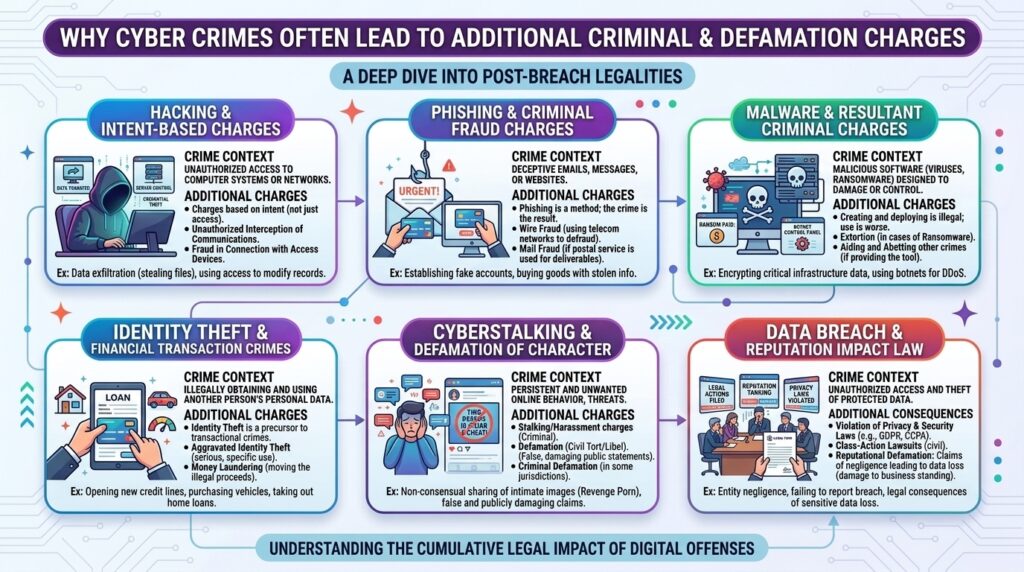
Why Cyber Crime Cases Often Bring Additional Criminal and Defamation Charges
In practice, a single cyber crime complaint filed in Pakistan rarely stays confined to one law. Someone who sets up a fake profile, edits a person’s photo, or spreads false claims about them on social media is not only facing action under PECA, the same conduct usually gives rise to a parallel case under ordinary criminal law and, in many instances, a defamation suit as well. The Federal Investigation Agency documented a rise in cybercrime complaints of roughly seventy percent between 2022 and 2024, and a large share of that increase involves harassment, blackmail, and reputation-damaging content rather than pure hacking or financial fraud. For someone accused of posting defamatory material online, the legal exposure is rarely limited to the electronic crimes charge itself, and building a defense that only addresses the cyber angle while ignoring the accompanying defamation claim often leaves a client only half protected. On the other side, a victim of online harassment or a morphed-image attack usually needs someone who can move between the cyber crime forum and the ordinary trial court at the same time, since many of these matters are eventually tried alongside charges framed under the general provisions handled by a criminal lawyer. Firms that treat cyber crime, defamation, and criminal defense as separate silos tend to miss connections that matter for bail applications, evidence sharing between forums, and sentencing arguments. Given how quickly these complaints are multiplying across Pakistan, choosing counsel who can handle the full spread of charges arising from one online incident, rather than just the PECA section, tends to produce a stronger outcome for the client in the long run.
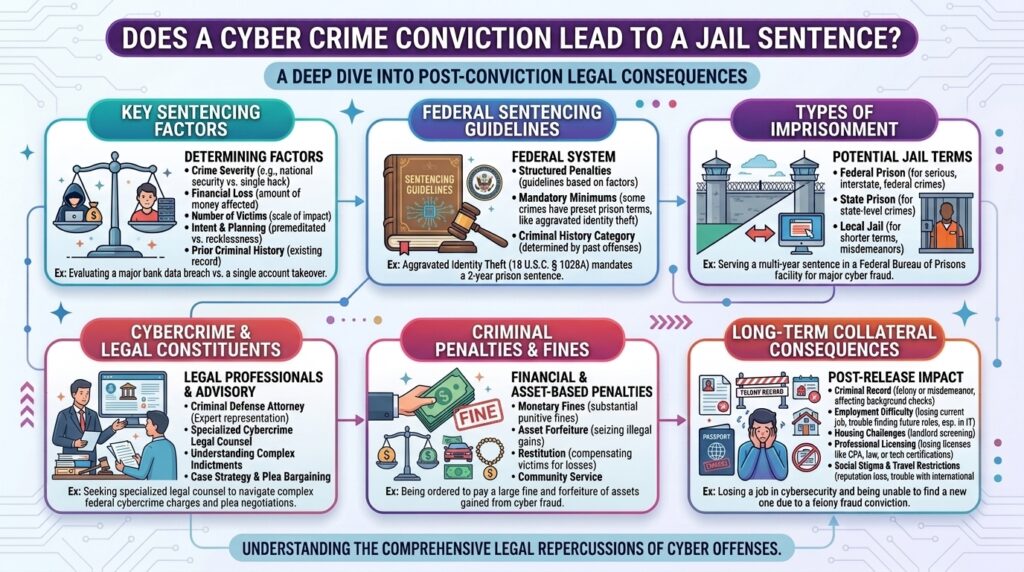
Does a Cyber Crime Conviction Lead to a Jail Sentence?
Yes, cyber crimes may carry a jail term. Some of these crimes include:
Hacking and system breaches: 3 to 10 years imprisonment
Cyber terrorism: not less than 7 years; may extend to life imprisonment
Online and financial fraud: 3 to 7 years imprisonment with financial penalties
Identity fraud with data breaches: 2 to 5 years imprisonment, with fines
Illegal content publication is punishable by 1 to 5 years imprisonment, more depending upon severity.
The sentence further varies based on the nature of the crime, the convicted party’s previous criminal record, and evidence against each unique case presented in court.
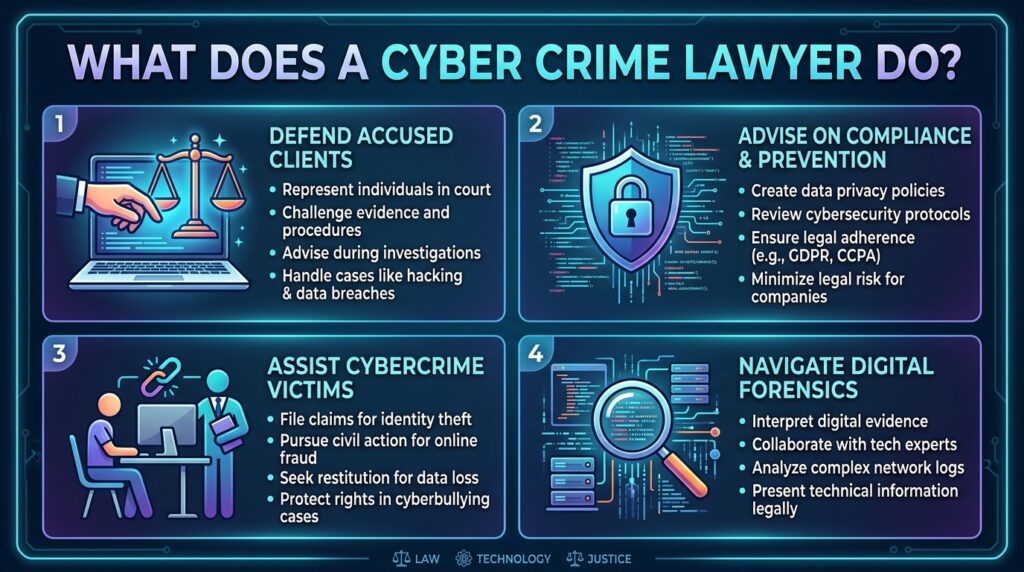
What Does a Cyber Crime Lawyer Do?
Cyber crime lawyer helps individuals and businesses with malpractice support during the charge of alleged cyber crimes. It includes:
Advising the client on his legal rights and obligations
Collecting evidence and examining digital data
Represent the client at courts and tribunals.
Negotiate settlements or plea bargains.
Advise the organization on compliance with cyber laws.
Harboring negation of legal exposure, upholding client rights, and representation is fair; hence, they are cybercrime lawyers.
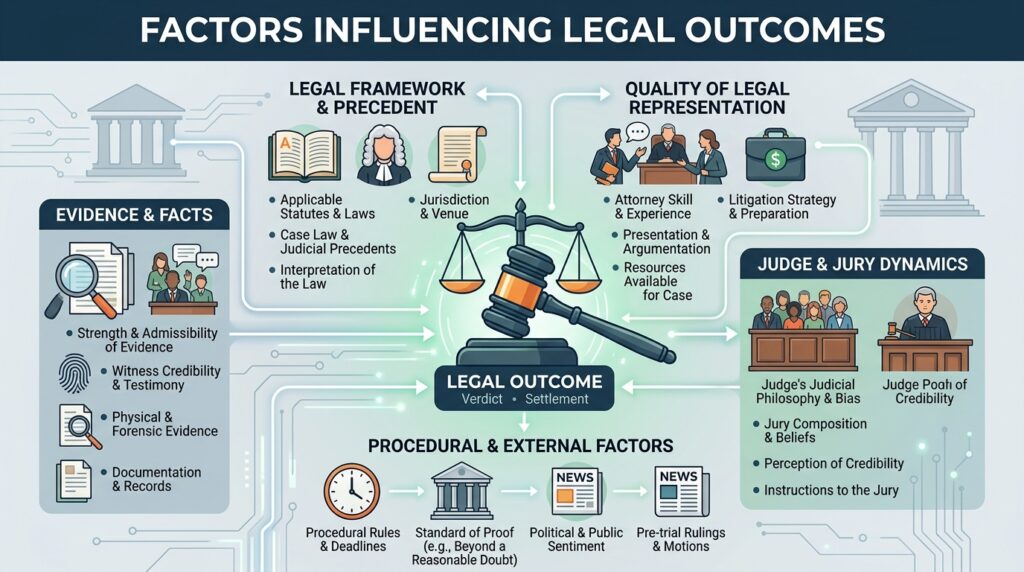
Influencing Factors on Legal Outcome
Many factors can influence the cybercrime charges and the degree of punishment:
Crime Severity: Very serious crimes carry higher prison sentences.
Weight of Evidence: Strong digital forensics plus solid documentation correlate with appropriate verdicts.
Criminal Record: Penalties increase for repeated offenders.
Legal Representation: Highly experienced cybercrime lawyers are more likely to ensure favorable outcomes in defense.
Proficient legal support largely determines both the procedure and outcome for a cybercrime case.
Preventive Measure: Avoiding Cyber Crime Charges
Individual and organizational means to defend oneself against code crime accusations are;
Secure Passwords with Two-Factor Authentication
Do not discuss sensitive topics through unsecured platforms.
Abide by rules and digital policies in settings for corporations.
Teaching employees about the threats and phishing attacks from cyber criminals
Hold records of all digital communications and transactions.
Such measures mitigate the risk of violations and help bolster any defense one might need to establish if any allegations surface.